

How to Choose Clothes That Boost Your Confidence
Quick Summary
To choose clothes that boost your confidence, start with fit, because clothes that fit well and feel comfortable help you stand straighter and speak with more ease. Audit your wardrobe first, then choose pieces that match your current life, using a few neutral basics and one statement piece.
- Fit matters more than trend, so check shoulders, sleeves, waistbands, and hem before buying.
- Run a four-pass wardrobe audit covering wear, fit, feeling, and gaps.
- Choose pieces that fit your current life rather than the person you hope to become.
- Consider cost per wear, dividing the total cost by how often you expect to wear the piece.
- Test each outfit by rating your mood before and after wearing it for ten minutes.
Table of Contents
- How to Choose Clothes That Boost Your Confidence
- Why Some Outfits Make You Feel Stronger Than Others
- Start With a Wardrobe Audit
- Choose Clothes That Fit Your Body and Your Life
- Use Color, Pattern and Statement Pieces on Purpose
- Dress for the Occasion, Including Beyond the Office
- Test Whether an Outfit Actually Lifts Your Confidence
- Building Your First Confidence-Boosting Outfit This Week
How to Choose Clothes That Boost Your Confidence
Last Updated: November 4, 2026
Why Some Outfits Make You Feel Stronger Than Others
Have you ever put on a certain jacket and felt taller, sharper, and ready for anything? The right clothes can change how you carry yourself, and that shift is worth understanding if you want to shop with purpose.
This guide shows you how to choose clothes that boost your confidence, using practical steps you can apply to any closet and any budget.
How clothing affects self-perception and self-esteem
Clothes send signals to you and to everyone around you. When an outfit fits well and feels comfortable, you tend to stand straighter and speak with more ease.
Here is what usually drives that effect:
- Fit: Clothes that pull, gape, or bunch distract you all day.
- Comfort: Scratchy fabric or tight waistbands pull your attention away from the moment.
- Familiarity: Pieces that match your personal style feel like "you" on sight.
A common mistake is buying clothes for the person you hope to become rather than the person you are today. Choose pieces that fit your current life first.
Enclothed cognition: what the research does and does not show
Researchers have studied an idea called enclothed cognition, which says the clothes you wear can shape how you think.
What this means for you: clothes probably influence mood and self-perception, but the effect is modest and varies from person to person. Use the advice in this guide as a way to test what works for you, not as a promise.
Start With a Wardrobe Audit
Before you buy anything, look at what you already own. A short audit shows you what to keep, what to fix, and what is missing. The goal is not to purge your closet for its own sake.
Most style advice stops at "sort into keep and donate piles." A repeatable audit goes further: it gives you a decision rule for every item, a way to handle pieces you are emotionally attached to, and a shopping list that reflects your real life rather than an aspirational one.
A repeatable four-pass audit
Work through your closet in four passes. Each pass has one job, so you are not trying to judge fit, color, and sentiment all at once.
- The wear-log pass. For two weeks, turn every hanger backward or place a small marker on each item as you wear it. At the end, anything still facing the wrong way has not been worn in fourteen days. This gives you evidence instead of memory.
- The fit pass. Try on every item you wore at least once. Check the same points a tailor would: shoulder seam, sleeve length, waistband, rise, and hem. Set aside anything that needs alteration rather than discarding it.
- The feeling pass. For each remaining piece, ask one question: does this make me feel more like myself, or less? If the answer is "less," it goes in the review pile even if it fits perfectly.
- The gap pass. Write down the specific outfits you actually need in the next month: workdays, a presentation, a dinner, a weekend trip. List the missing pieces that would complete those outfits.
Handling the emotional pile
Almost everyone owns clothes tied to a past version of themselves: a smaller size, a former job, a gift from someone. A common pattern is to keep these pieces "just in case," which quietly adds friction every time you open the closet.
Use a simple rule. If a piece does not fit today and you would not pay to alter it, move it out of your daily rotation. You do not have to throw it away.
Inclusive audit questions
Standard fit advice assumes a body that can stand, bend, and dress without assistance. Adjust the audit to your actual needs:
- Mobility and dressing: Note which closures, necklines, and sleeve shapes you can manage independently. Prioritize those in your gap list.
- Sensory needs: Flag fabrics, seams, tags, and waistbands that bother you, and treat "uncomfortable" as a disqualifier, not a preference.
- Gender expression: Audit against how you want to be read, not against a department label. A men's cut shirt or a women's blazer can both belong in the same closet.
Turn the audit into a shopping list
Once the audit is done, you should have a short list of gaps. Rank each gap by how many outfits it unlocks. A neutral blazer that works with four bottoms beats a statement piece that works with one.
When you are ready to fill the gaps, browse the Buy Versatile Office Clothing Online: A 2026 Guide for pieces that work across settings, and keep the list in hand so you shop with a plan.
Choose Clothes That Fit Your Body and Your Life
Fit matters more than trend. A simple, well-cut piece beats a fashionable one that does not suit you. But "good fit" is not one silhouette. It is the intersection of your body, your budget, and the life you actually live.
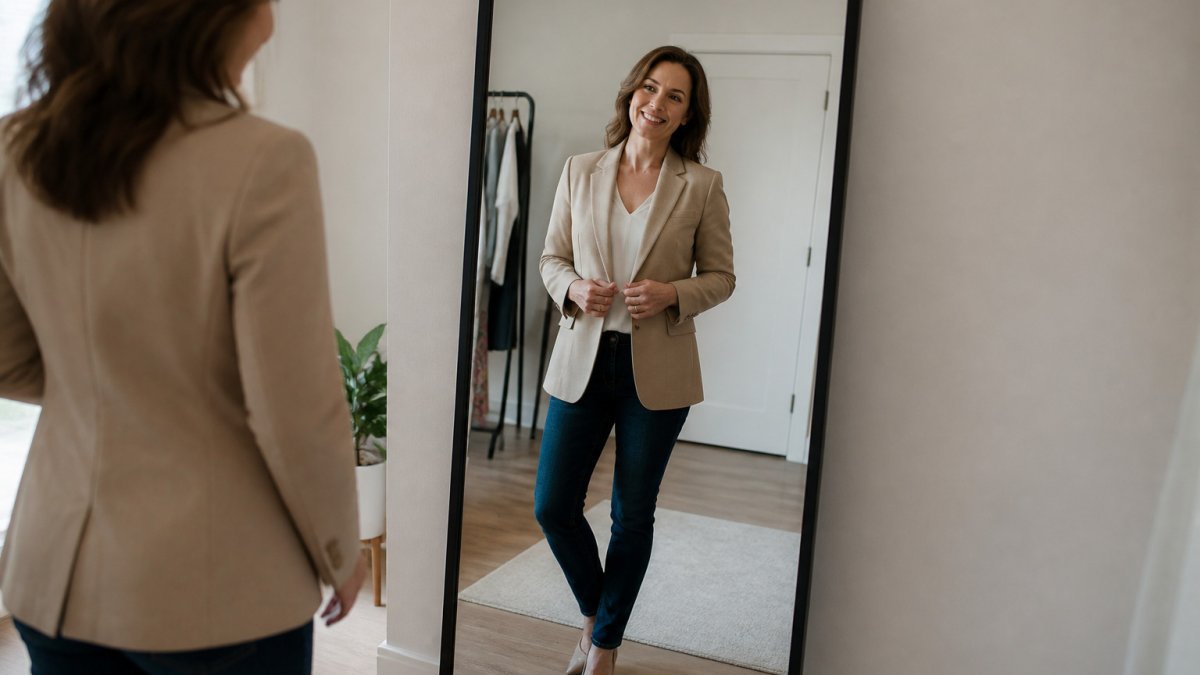
Use this checklist when you shop:
- Shoulders sit at the edge of your natural shoulder line
- Sleeves end at the wrist bone or just past it
- Waistbands sit where you want them without digging in
For a deeper look at silhouettes, read How To Find Clothes That Fit Your Body Type. It explains which cuts work with different shapes.
Fit, tailoring and silhouette
Tailoring is one of the best returns on your money. A small alteration, such as shortening trousers or taking in a waist, can turn an average piece into a favorite.
Before you buy, ask three questions:
- Can this be altered? A waist can usually be taken in. Shoulders are expensive to change. If the shoulders do not fit, walk away.
- What will the alteration add? Factor the tailor's quote into the total cost before you commit. A piece that needs major work is rarely a bargain.
- Will I wear it enough to justify both? Divide the total cost by the number of times you expect to wear it. That cost-per-wear number is a better guide than the tag price.
A tailored blazer is a good example. Our Women's Professional Blazer Trousers Suit gives you a sharp, structured look that works for meetings and evening events alike.

Budget-conscious fit decisions
You do not need a large budget to dress well. A few habits stretch it further:
- Buy versatile pieces first. A neutral blazer, a well-fitting pair of trousers, and a simple knit unlock more outfits than a single statement item.
- Consider secondhand and resale. Many pieces are barely worn, and a tailor can adjust them to you.
- Prioritize alterations over new purchases. Fixing what you own is often cheaper than replacing it.
Comfort, fabric and sensory needs
Comfort is not a luxury. If a fabric itches, a seam rubs, or a label scratches, you will feel it all day. Everyone's sensory needs are different, so trust how a piece feels on your body.
Consider these points:
- Soft, breathable fabrics suit long days and warm climates.
- Structured fabrics hold their shape but may feel stiff at first.
- Check seams and labels, especially on the neck and waist.
Inclusive fit across bodies and needs
Generic fit advice often assumes a single body type. A practical framework adjusts for the body in front of you:
- Different body types: Fit the largest part of you first, then tailor the rest. If hips are the widest point, buy for the hips and take in the waist.
- Disabilities and mobility needs: Look for magnetic closures, elastic waistbands, side zips, and seated-cut trousers. These are fit features, not compromises.
- Gender expression: Choose the cut that matches how you want to be read, and ignore the label on the hanger.
A piece that fits your body and your life is one you will reach for without thinking. That is the real test.
The article's key fit checks and budget habits can be scanned at a glance:
| Check | What to look for | Why it matters |
|---|---|---|
| Shoulders | Sit at the edge of your natural shoulder line | Shoulders are costly to alter |
| Sleeves | End at the wrist bone or just past it | Sets the look of the whole piece |
| Waistband | Sits where you want it without digging in | Affects comfort all day |
| Movement | You can sit, reach and bend without strain | Comfort decides how often you wear it |
| Hem | Lands at a length you like with your shoes | Changes the overall proportion |
| Cost per wear | Total cost divided by expected wears | Better guide than the tag price |
Use Color, Pattern and Statement Pieces on Purpose
Color and pattern can lift your mood, but only when you choose them with intent. Start with colors you already wear and feel good in. Then add one new color at a time.
A simple approach works well:
- Neutrals as a base: Black, navy, cream, and gray make mixing easy.
- One accent color: Use a shade you love near your face, such as in a scarf or top.
- One statement piece: A bold jacket or dress is enough for most outfits.
Statement pieces work best when the rest of the outfit stays calm. You can see a bold, well-cut moto jacket in black that works as a statement piece over simple basics. For example, the Vintage Washed PU Leather Biker Jacket | Slim Fit Moto Zip | Black adds edge over a simple tee and jeans, or softens a floral dress.

Watch out: buying many bold pieces at once can make a wardrobe feel loud and hard to coordinate. Add them slowly.
Dress for the Occasion, Including Beyond the Office
Workplace dress codes are a clear guide, but confidence matters everywhere. Think about the situations you face each week, not just your job.
Try planning outfits for these settings:
- Work meetings: Tailored pieces in neutral tones.
- Social dinners: A dress or blouse with one special detail.
- Weekend errands: Comfortable layers you can add or remove.
For office-friendly basics, the Women's Faux Leather Stand Collar Blazer pairs with tailored trousers for work and with jeans for an off-duty look. The Women's Classic Leather Jacket layers easily over knitwear and dresses in cooler months.

Balance your own taste with social expectations. You do not need to follow every trend, but you should understand the norms of each setting so you feel comfortable walking in.
Test Whether an Outfit Actually Lifts Your Confidence
Instead of guessing whether an outfit works, test it. This quick method helps you learn what really boosts your mood.
- Rate your mood before dressing. Use a scale from 1 to 10.
- Put on the outfit and wear it for ten minutes. Walk around, sit, and move.
- Rate your mood again. Note any change.
- Notice how you act. Did you speak up, make eye contact, or stand taller?
- Repeat with a second outfit. Compare the results over a week.
Keep a short note on your phone. After a few weeks, you will see patterns. You might find that a blazer boosts you at work, while a soft knit helps you relax on weekends.
Building Your First Confidence-Boosting Outfit This Week
Start small. Pick one outfit this week that you know fits well and feels good. Use this plan:
- Choose one anchor piece. This could be a blazer, jacket, or dress you love.
- Add two supporting pieces. Choose basics in neutral tones.
- Add one detail. A bag, scarf, or pair of shoes that makes you smile.
- Wear it for a full day. Notice how it feels from morning to night.
- Write down what worked. Use those notes for your next purchase.
Shopping for your wardrobe should feel exciting, not stressful. Browse the Capsule Wardrobe For Women Over 50 guide for a structured way to build a closet that supports your confidence, or explore How to Fix the Feeling You Have Nothing to Wear if you need help getting started this week.
When you are ready to build your next outfit, shop the collection and choose the pieces that make you feel like yourself.
