

How to Care for Professional Workwear Fabrics
Quick Summary
Check the care label first, then sort workwear fabrics by blend and wash each group on cold or cool water with low heat. Heat and harsh friction cause most fading, pilling, and lost stretch, so skip hot water, bleach, and high-heat drying.
- Read the fabric content line and washing symbols on each garment's care label before washing.
- Sort by fabric family first, then by color and soil level, and wash each pile separately.
- Use cold water and low heat for stretch fabrics, since high heat breaks down elastane over time.
- Skip fabric softener and dryer sheets on moisture-wicking knits, because they block wicking performance.
- Blot stains instead of rubbing, use cold water first, and air dry until the stain is gone.
Table of Contents
- Start With the Care Label and Fabric Content
- How to Wash Work Clothes Without Fading or Shrinking
- How to Care for Wool Clothing in a Work Wardrobe
- How to Remove Stains From Clothes Before They Set
- Caring for Logos, Embroidery and Workplace Soils
- How to Store Work Clothes Between Wears
- Your Next Step: Build a Care Routine for Your Work Wardrobe
How to Care for Professional Workwear Fabrics
Last Updated: October 28, 2026
Start With the Care Label and Fabric Content
The care label inside each garment is the first place to look, and it is more useful than most people realize. Knowing what your workwear fabrics are made of tells you how to wash, dry, and store them.
Look at the fabric content line first. You can also view the women's professional blazer trousers suit set to compare its fabric content against your own pieces. It lists the fibers, such as polyester, wool, cotton, or elastane. Then read the washing and drying symbols. These tell you the safe temperature, whether tumble drying is allowed, and whether ironing is safe.

Most care problems start when people ignore the label and wash everything the same way. A blazer and a cotton shirt rarely need the same treatment.
Reading Blends Like Polyester and Elastane
Many professional pieces are blends. A common example is a jacket made from polyester with a small amount of elastane for stretch. Each fiber reacts differently to heat and friction.
- Polyester resists wrinkles and holds shape, but it can pill and trap odors.
- Elastane gives stretch, but high heat can break it down over time.
- Wool blends need gentler handling and usually lie flat to dry.
- Cotton shrinks if it gets hot water or a hot dryer.
How to Wash Work Clothes Without Fading or Shrinking
Washing is where most workwear gets damaged, and the right method depends far more on fiber blend than on a single universal routine. A polyester-cotton uniform shirt, a stretch ponte trouser, a flame-resistant coverall, and a moisture-wicking polo each need different handling. Use the care label as the baseline, then adjust for the fabric family below.
Sorting by Color, Fabric and Soil Level
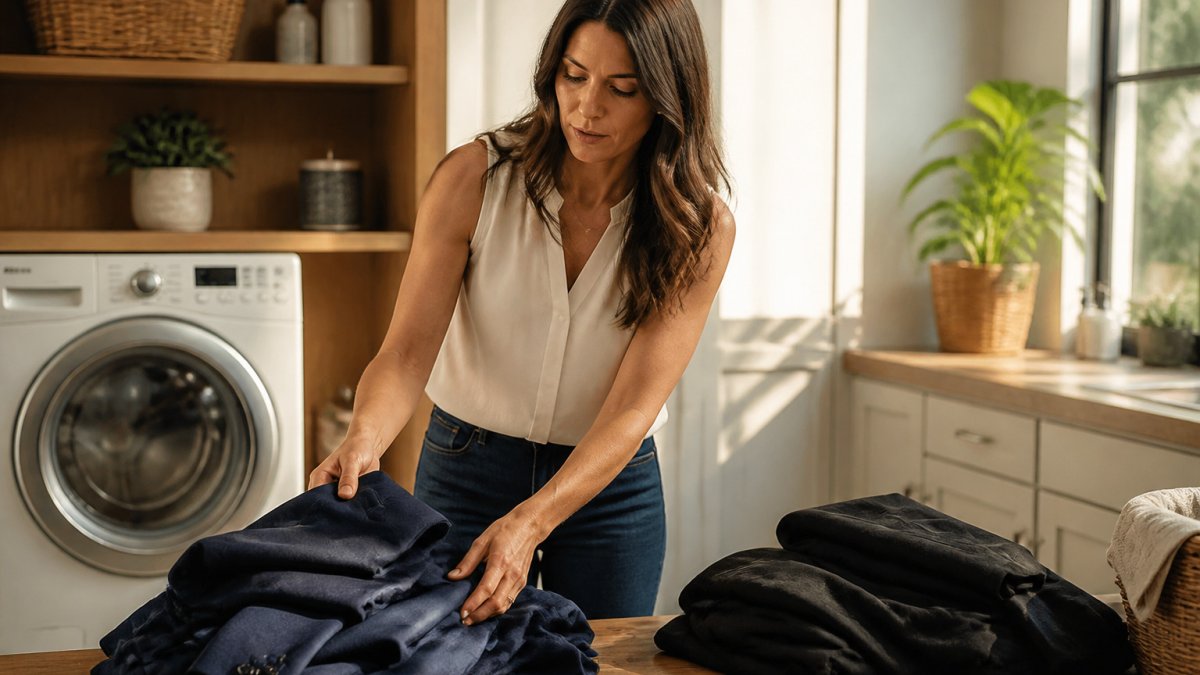
Sorting is the simplest way to protect clothes, but for workwear you should sort by fabric family first, then by color and soil level. Group garments into these piles:
- Polyester-cotton blends: Uniform shirts, trousers, and suiting separates. Wash together on a cool, gentle cycle.
- Stretch fabrics (elastane or spandex blends): Ponte trousers, stretch blazers, and fitted shirts. Keep heat low to protect the stretch fibers.
- Technical and moisture-wicking knits: Performance polos and base layers. Wash separately from cotton to avoid lint transfer and softener contamination.
- Flame-resistant and protective garments: Follow the manufacturer's laundering instructions exactly; do not mix with everyday laundry.
- Delicate fabrics: Silk, lightweight blends, and anything with embellishments.
- Heavily soiled items: Pieces that need extra pre-treatment, washed apart from lighter loads.
Wash each pile separately. This keeps dye from bleeding, stops heavily soiled items from dulling lighter fabrics, and prevents the wrong detergent or heat setting from reaching a fabric that cannot take it.
Choosing Temperature, Cycle and Detergent by Fabric
Cold water is the safest default for most professional fabrics, but the details matter by blend:
- Polyester-cotton blends: Cool water on a gentle or permanent-press cycle. Polyester resists wrinkles but traps body oils and odors, so use a detergent formulated for synthetic fibers and avoid overloading the drum.
- Stretch fabrics: Cold water and low heat throughout. High heat breaks down elastane over time, which is the most common reason stretch workwear loses shape and recovery.
- Moisture-wicking textiles: Skip fabric softener and dryer sheets entirely. Softeners coat the fibers and block wicking performance, and the effect builds with every wash.
- Flame-resistant garments: Use only the detergent and cycle the manufacturer specifies. Harsh bleaches, fabric softeners, and some stain treatments can leave residue that affects protective performance.
- Wool and wool blends: Cold water on a wool or gentle cycle, only when the label allows, with a mild detergent.
Pick a mild liquid detergent without harsh bleach for everyday pieces. Bleach can weaken fibers and cause fading. For technical blends, check the label for softener restrictions before adding anything to the load.
Turning Garments Inside Out and Protecting Details
Turn dark pieces and anything with embroidery, heat transfers, or printed logos inside out before washing. This reduces surface friction that dulls color and abrades prints. Close zippers and hook-and-loop fasteners so they do not snag neighboring garments, and empty pockets of pens, tools, and debris that can stain or damage a load.
Here is a quick reference for matching each fabric family to its washing temperature and cycle.
Fabric family |
Water and cycle |
Key caution |
|---|---|---|
Polyester-cotton blends |
Cool water, gentle or permanent-press cycle |
Use detergent for synthetics; avoid overloading |
Stretch fabrics (elastane blends) |
Cold water, low heat throughout |
High heat breaks down elastane |
Moisture-wicking knits |
Wash separately from cotton |
Skip fabric softener and dryer sheets |
Flame-resistant garments |
Follow manufacturer instructions exactly |
Harsh bleach and softeners leave residue |
Wool and wool blends |
Cold water, wool or gentle cycle |
Mild detergent only; can felt in hot water |
How to Care for Wool Clothing in a Work Wardrobe
Wool is a staple for many professional wardrobes, especially in fall and winter. It is durable, but it needs careful handling.
Wash wool only when the care label allows it, and use cold water on a gentle cycle. Wool can felt, or shrink, when agitated in hot water.
Dry wool flat on a towel. Hanging wet wool can stretch it out of shape. Never put wool in a hot dryer.
Store wool pieces folded or on wide hangers. Cedar blocks or breathable bags help keep moths away.
How to Remove Stains From Clothes Before They Set
Stains set quickly when they dry. Treat them as soon as you can.
- Blot, don't rub. Rubbing pushes the stain deeper into the fiber.
- Use cold water first. Hot water can lock in protein-based stains.
- Test a hidden spot. Check colorfastness before using any cleaner.
- Air dry after treating. Heat can make a stain permanent.
Common work stains include coffee, ink, and makeup. Apply a mild stain remover, wait a few minutes, then wash as usual.
Caring for Logos, Embroidery and Workplace Soils
Logos, embroidery, and heat-transfer prints need extra care, and workplace soils are often tougher than everyday laundry. For ideas on how accessories and embellished pieces fit into work looks, see our accessories styling guide for work. Heat and harsh friction can lift designs, while grease, oil, paint, and food can set permanently if handled wrong.
Protecting Logos, Embroidery and Heat Transfers
Turn embroidered and printed items inside out before washing. Avoid ironing directly over logos; place a cloth between the iron and the design, and use low heat. Heat-transfer prints and vinyl logos are the most heat-sensitive, so keep the dryer on low or air dry when the label allows. If a logo starts to peel or lift, stop using high heat immediately and switch to gentler washing and lower drying temperatures.
Pretreating Workplace Soils Safely
Office and job-site clothing picks up soils that everyday laundry advice does not address. Treat them promptly and always test a hidden spot first.
- Grease and oil: Blot excess, apply a small amount of grease-cutting detergent or a pretreatment product, let it sit, then wash in the warmest water the label allows.
- Paint: Identify whether it is water-based or oil-based before treating; water-based paint responds to cool water and detergent, while oil-based paint usually needs a solvent-based remover and may require professional cleaning.
- Food and coffee: Rinse with cold water first, then pretreat with a mild stain remover before washing.
- Sweat, lotion, and dust buildup: Pretreat collars and underarms with a mild cleaner to prevent yellowing and odor.
Preserving Protective Performance and Compliance
If your workwear carries protective features, laundering can affect them. Flame-resistant garments, high-visibility clothing with reflective trim, and water-repellent finishes all depend on care that follows the manufacturer's instructions. Harsh detergents, fabric softeners, bleach, and high heat can leave residue or degrade finishes, and in some cases that affects whether the garment still meets the standard it was purchased to satisfy. When a garment is issued under a workplace program, follow the employer's or manufacturer's laundering protocol rather than improvising at home, and check the label for any restrictions on softeners, bleach, or drying temperature. When protective performance matters, treat the care label and the manufacturer's instructions as the authority, not general wardrobe advice.
How to Store Work Clothes Between Wears
Good storage keeps workwear looking sharp longer.
- Hang structured pieces like blazers on padded or wide hangers.
- Fold knits and wool to prevent stretching.
- Let clothes air out for a day before putting them away.
- Keep items in a cool, dry closet away from direct sunlight.
Avoid storing clothes in plastic bags for long periods. Trapped moisture can cause odors and mildew.
Your Next Step: Build a Care Routine for Your Work Wardrobe
Start with one habit this week. Check the care labels on your three most-worn pieces and set up a simple sorting system. Small changes add up to clothes that look better and last longer.
For a versatile starting point, you can explore our women's professional blazer trousers suit set. You can also read our capsule wardrobe checklist for work to decide which pieces to keep and maintain together.
