

How to Add More Color and Personality to Your Style
Quick Summary
Start with a neutral base of three to five pieces you wear often, then add one colorful item at a time. Learning how to add more color and personality to your style works best when you first find your personal style and choose colors that suit your undertone. Build outfits around one bright piece, and repeat the color in a small detail so the look stays connected.
- Choose three to five neutral pieces you wear most often as your base.
- Audit the ten pieces you reach for most to reveal your real style.
- Pick one or two feeling words, such as relaxed, polished or bold, to guide choices.
- Check the veins on your wrist: greenish suggests warm, bluish or purple suggests cool.
- Add one color at a time and repeat it in a small detail like a bag or belt.
Table of Contents
- Start With Your Neutral Base
- How to Find Your Personal Style Before You Add Color
- A Beginner Color Plan Based on Undertone and Contrast
- How to Incorporate Color Into Your Wardrobe in Steps
- Colorful Outfit Ideas for Women Across Different Settings
- How to Accessorize a Neutral Outfit
- Your Next Step: Build One Color-Forward Outfit This Week
Start With Your Neutral Base
Last Updated: November 14, 2026
Learning how to add more color and personality to your style works best when you start from a base you already trust. A few well-fitting neutrals in black, cream, khaki or denim can make every bright piece look intentional instead of random.
Think of the neutral base as the frame. Once it is in place, one colorful item can do the heavy lifting.
- Choose three to five neutral pieces you wear most often
- Check that the fit feels right before you add anything new
- Build outfits around one bright item at a time
A neutral outfit is also a good place to test your style. You can swap one piece and see whether the change feels like you.
How to Find Your Personal Style Before You Add Color
Your personal style is the set of choices that make you feel most like yourself. For a companion guide, see finding your personal style before you start adding color. Finding it first keeps you from buying colors you never reach for, and it gives you a filter for every future purchase. Here is a practical exercise you can do with clothes you already own.
Step 1: Audit what you actually wear. Pull out the ten pieces you reach for most often. Lay them on the bed and look for patterns: Are they mostly solid or patterned? Structured or soft? Dark or light? Notice which ones get compliments and which ones you grab without thinking. The repeats are your real style, not the aspirational pieces in the back of the closet.
Step 2: Name the feeling. Pick one or two words that describe how you want to feel in your clothes, relaxed, polished, playful, grounded, bold. Write them down. These words become a test: if a color or piece doesn't support that feeling, it's not for you, no matter how trendy it is.
Step 3: Choose a signature detail. A signature detail is a repeatable element that shows up across your outfits, a type of collar, a metal tone, a favorite print scale, or a consistent accessory shape. Look at your ten most-worn pieces and identify one detail that appears more than once. That is your signature. You can amplify it intentionally: if you love a round neckline, seek out round-neck tops in your new colors; if you always wear gold-tone jewelry, let that guide your accessory choices.
Step 4: Test with one change. Take one outfit you already love and swap a single element, a scarf, a bag, a shoe, for something in a color from your plan. Wear it for a day and note how it felt. If it felt like you, keep the change; if not, you have learned something about your boundaries.
- Save photos of outfits that make you feel confident
- Note the shapes, textures, and colors that repeat
- Pick one or two words that describe the feeling you want
- Identify one signature detail you can repeat on purpose
Once you know your words and your signature detail, you can choose colors that support them instead of guessing.
Here is a quick reference for the four steps of the personal style audit.
| Step | What to do | Time or frequency |
|---|---|---|
| Step 1: Audit what you wear | Lay out the ten pieces you reach for most and look for patterns | Do once with your closet |
| Step 2: Name the feeling | Pick one or two words, such as relaxed, polished, playful, grounded or bold | Write down once |
| Step 3: Choose a signature detail | Find one repeatable element, such as a collar type, metal tone or print scale | Look across your ten most-worn pieces |
| Step 4: Test with one change | Swap one element, such as a scarf, bag or shoe, and wear it for a day | Wear for one day |
A Beginner Color Plan Based on Undertone and Contrast
Color works best when it suits your natural coloring. Two simple checks help you choose.
Undertone: Look at the veins on your wrist. Greenish veins often point to a warm undertone, while bluish or purple veins often point to a cool one. Warm shades like camel, rust and olive tend to flatter warm undertones. Cool shades like navy, berry and emerald tend to flatter cool undertones.
Contrast: Compare your hair, skin and eyes. If they are all similar in depth, you likely have low contrast and do well with softer colors. If there is a strong difference, you can usually wear bold, high-contrast combinations.
A simple starter plan:
- Pick two colors that flatter your undertone
- Keep one bright color for accents
- Add one neutral to balance the palette
Choosing Your Intensity Level
Intensity is how bright or muted a color feels. Start with a level that matches your comfort zone. Soft, muted tones suit a quieter style, while saturated shades suit a bolder one.
You can always move up in intensity. Begin with a smaller dose, such as a bright scarf, and add more as you grow more comfortable.
How to Incorporate Color Into Your Wardrobe in Steps
You do not need a complete overhaul to learn how to add more color and personality to your style. Work through these steps one at a time.
- Pick one color. Choose the shade that flatters you most from your plan.
- Add one statement piece. A color-block cardigan or a bright top works well as a first step.
- Pair it with neutrals. Wear it with black, denim or cream so the color stands out.
- Repeat the color in a small detail. A bag, belt or necklace keeps the look connected.
- Add a second color only after the first feels natural.
As a first piece, our Women's Color-Block Striped Knit Cardigan Coat gives you a bold shape to start with. Layer it over a neutral tee and jeans to test the look.
Watch out: buying a color because it is trendy often leads to pieces you never wear. Check that the shade works with at least two items you already own.
Colorful Outfit Ideas for Women Across Different Settings
The right outfit depends on where you are going, but the goal is the same: one clear color story that feels like you. These formulas give you a repeatable starting point for work, weekends, and occasions, and they focus on proportion and color placement rather than a specific silhouette.

For the office:
- Start with a neutral base: tailored trousers, a pencil skirt, or dark denim if your workplace allows it.
- Add one muted color on top: a blouse in olive, berry, or navy keeps the look professional while still showing personality.
- Place a small color accent where it won't distract: a structured bag, a slim belt, or stud earrings in a shade that echoes your top.
- If you want more color, repeat it in a second small detail rather than adding a new hue.
For a weekend out:
- Use dark jeans or a simple dress as the base.
- Choose one bold layer: a color-block cardigan, a bright jacket, or a patterned overshirt.
- Keep shoes and bag neutral so the bold layer does the talking.
- For a low-contrast look, pick a bold layer in a softer intensity; for high contrast, go saturated.
For a casual day:
- Start with a solid tee in a neutral shade.
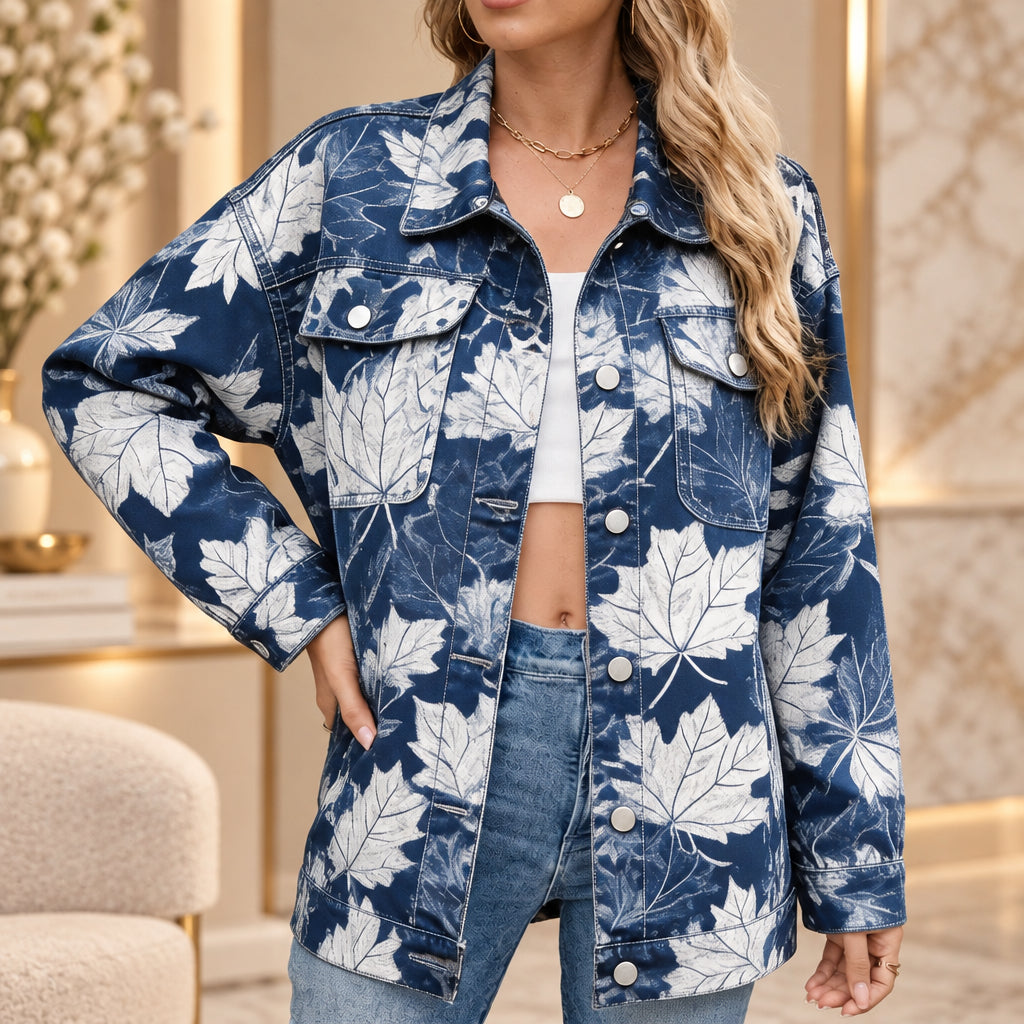
- Add a patterned or botanical-print layer such as our Women's Botanical Print Drop-Shoulder Denim Jacket.
- Ground the print with simple denim or chinos in a solid tone.
- If prints feel like too much, choose a print that contains one of your neutral colors so it ties back to the base.
For an occasion or evening:
- Begin with a dark neutral base: black, navy, or deep charcoal.
- Add one saturated color in a single piece: a jewel-tone top, a colored clutch, or a statement necklace.
- Keep the rest of the outfit quiet so the color reads as intentional.
- If you prefer low contrast, use a tonal approach: two shades of the same color family instead of a sharp bright.
Best for: anyone who wants a polished look that still feels personal. Skip if: you need a fully neutral wardrobe for a strict dress code. In that case, let color come from accessories instead.
Watch out: formulas are starting points, not rules. If a combination feels off, change one element at a time, swap the shoe, then the bag, rather than abandoning the whole outfit.
How to Accessorize a Neutral Outfit
Accessories are the fastest way to add personality without changing your clothes. A neutral outfit gives them room to stand out.
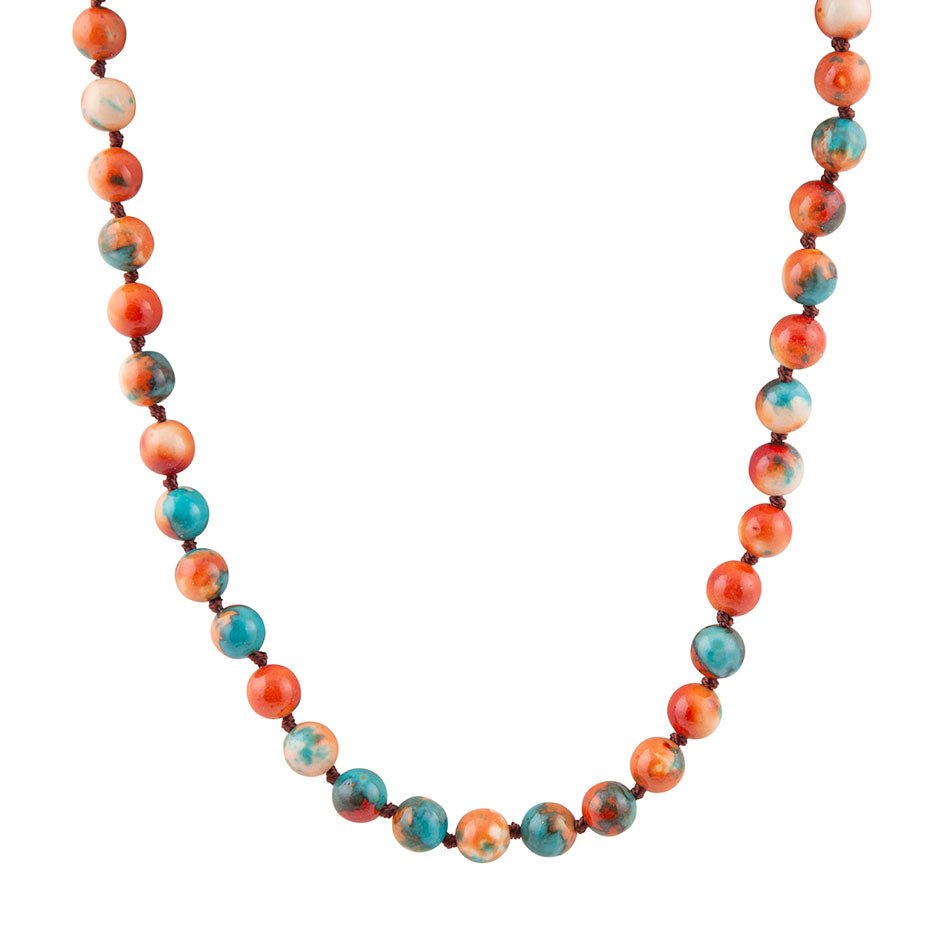
Try a bold necklace with a simple neckline. A round neckline suits a chunky piece, while a V-neck works well with a longer chain. Our Diversity Necklace brings rich, contrasting glass beads to a plain top or tee in seconds.

Other easy additions:
- A colored scarf tied at the neck or bag handle
- A bright bag against a black or cream outfit
- Earrings in one color that echoes your statement piece
For a larger statement, our Immeasurable Multicolor Ocean Jade Golden Wrap Necklace layers orange and blue tones over a neutral outfit with real presence.
Your Next Step: Build One Color-Forward Outfit This Week
Pick one neutral base you already own, add one color piece, and wear it out this week. Notice how it feels and what you would change next time.
Rick's by Design offers a curated collection of stylish, on-trend pieces to help you express your own style. Browse the shop when you are ready to add your next statement piece.