

Inclusive Sizing Fashion Brands: A 2026 Guide
Table of Contents
- What Inclusive Sizing Fashion Brands Actually Deliver
- Why Size Inclusivity Matters in Modern Fashion
- Stylish Clothes for Curvy Body Types: What Works
- How to Measure Yourself for Clothing: The Right Way
- Best Practices for Inclusive Fashion Shopping
- Evaluating Brands: Fit Consistency, Transparency, and Returns
- Building Your Inclusive Wardrobe: From Casual to Professional
- Frequently Asked Questions
Last Updated: September 23, 2026
What Inclusive Sizing Fashion Brands Actually Deliver
Inclusive sizing fashion brands 2026 go far beyond extended size ranges; they reimagine garment construction and provide a comprehensive customer experience tailored to diverse body types. Most retailers simply scale patterns linearly, failing to account for how proportions change across sizes. Authentic inclusive sizing fashion brands prioritize proper pattern grading and fit testing across multiple body types alongside transparent measurement charts.
Genuine inclusivity requires a three-pronged approach: offering sizes that span the full spectrum, ensuring fit consistency across various fabrics and styles, and maintaining authentic representation in marketing imagery.
Why Size Inclusivity Matters in Modern Fashion
Size inclusivity matters as it highlights the gap between offering extended sizes and truly well-fitting options. The reality is that genuine inclusive sizing remains rare in the fashion industry.
It's essential to acknowledge that fabric behavior further complicates fit issues. A garment that drapes beautifully in smaller sizes might cling uncomfortably in larger sizes due to differences in fabric weight as size increases. These factors necessitate that brands rigorously test their designs on multiple sizes to mitigate problems that could lead to increased returns.
Moreover, when customers experience positive interactions with inclusive sizing fashion brands, finding clothes that fit well and seeing themselves represented in brand imagery enhances their confidence. This, in turn, leads to higher purchase frequency and lower return rates.
Stylish Clothes for Curvy Body Types: What Works
Stylish clothes for curvy body types focus on balancing proportions. The best pieces incorporate strategic seaming and flattering fabrics to enhance rather than conceal.
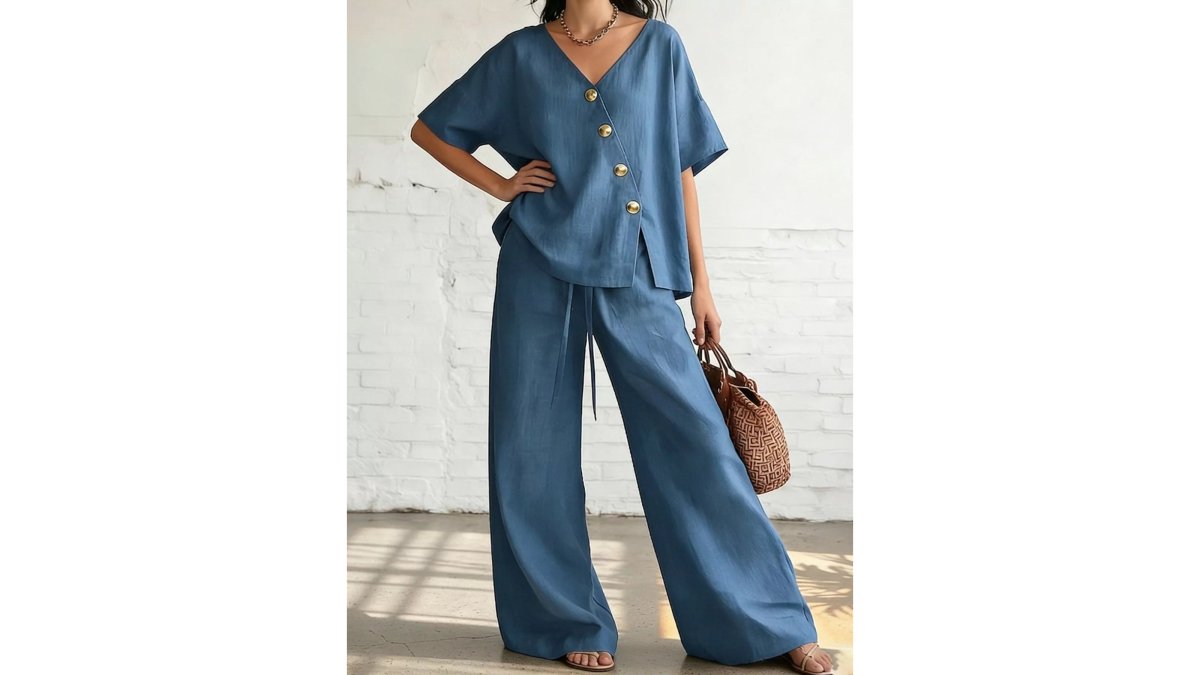
Pieces like the Plus Size Surplice Wide-Leg Pants Set exemplify this principle. The surplice neckline adds chest definition, and the stylish details provide visual interest without adding bulk. The slightly stretchy polyester allows for movement, accommodating individual curves.


Wide-leg styles are versatile and work across both casual and professional settings.
How to Measure Yourself for Clothing: The Right Way
Measuring yourself accurately can eliminate uncertainty when shopping online. Most fit problems originate from mismeasuring or misunderstanding measurement concepts.
- Bust: Measure around the fullest part of your chest, ensuring the tape is parallel to the ground
- Waist: Locate your natural waistline and measure loosely, avoiding tightness
- Hips: Measure around the fullest part of your hips and thighs, generally 8-9 inches below your waist
- Length: For tops, measure from your shoulder down to the desired hem length; for pants, measure from your hip bone down the outside of your leg to your ankle
Best Practices for Inclusive Fashion Shopping
True inclusive sizing means offering sizes from XS or S through at least 3XL or 4XL, with proper proportional fit adjustments. If a brand offers a size range that only encompasses one fit model, they likely haven't committed to real inclusivity.
Evaluating Brands: Fit Consistency, Transparency, and Returns
Fit consistency across various fabrics and styles is crucial for brands genuinely investing in inclusive sizing, as many merely scale a medium template, failing to accommodate proportionate differences in body shapes.
| Evaluation Criteria | What to Look For | Why It Matters |
|---|---|---|
| Pattern Grading | Proportional adjustments across sizes, not linear scaling | Ensures fit works across the full spectrum, not just at one size |
| Fit Testing | Evidence of testing across multiple body types and fabrics | Catches fit issues before production rather than through returns |
| Measurement Charts | Detailed dimensions with context (where each is measured, fit guidance) | Lets you predict fit accurately and spot vanity sizing |
| Fabric-Specific Notes | Transparency about how different fabrics fit (stretch vs. rigid) | Indicates the brand understands construction and has tested variations |
| Return Logistics | Prepaid labels and 5-7 day refund timelines | Removes financial and time barriers to trying multiple sizes |
| Consistent Photography | Same style on diverse models across all sizes, same angles and lighting | Shows realistic fit and fabric behavior without styling tricks |
| Fit Disclaimers | Notes like "runs small" or "size up in this fabric" | Signals genuine testing and willingness to acknowledge fit quirks |
Building Your Inclusive Wardrobe: From Casual to Professional
Creating a functional wardrobe based on inclusive sizing fashion brands involves starting with foundational pieces that transition well across various settings, then gradually adding specific pieces that enhance your look.
Frequently Asked Questions
What does size-inclusive actually mean in the fashion industry?
Size-inclusive fashion means brands carry a genuine, extended range of sizes, typically from XS through 5XL or beyond, with consistent fit and quality across that entire spectrum. True inclusivity goes beyond offering large sizes; it means using size-blind design principles where garments are graded proportionally for all body types, not just scaled up from smaller sizes. Inclusive brands also prioritize diverse model representation in their marketing and invest in fit testing across multiple body shapes to ensure pieces work for everyone.
How can I determine my true size across different inclusive brands?
Start by taking accurate measurements of your bust, waist, hips, and inseam using a soft measuring tape. Compare these measurements directly to each brand's sizing chart rather than assuming your typical size will transfer. Many inclusive brands publish detailed measurement charts on their product pages. Document your measurements from three reliable brands you've had success with, then reference those when shopping new brands. Pay attention to fabric type, as stretchy materials may fit differently than rigid fabrics, even within the same brand.
Why is size inclusivity important for modern fashion consumers?
Size inclusivity directly addresses the reality that women's bodies are diverse. When brands limit their size range, they exclude customers and reinforce the false idea that only one body type deserves stylish, on-trend clothing. Inclusive sizing also reduces return rates and customer frustration because fit consistency improves when brands design intentionally for multiple body shapes from the start. For consumers, it means access to professional, casual, and special-occasion pieces that actually fit, building confidence and reducing the time and cost spent on returns and replacements.
What should I look for when shopping for inclusive clothing brands?
Prioritize brands that publish detailed, transparent measurement charts, showing product photos on multiple body types. Assess their return policy, as reputable inclusive brands understand fit varies. Look for brands that discuss their size-grading process and pattern-making approach. Examine whether they represent a diverse range of models in their marketing and ensure their size range extends to at least 5XL. Customer reviews specifically about fit consistency across different sizes can also help identify brands that deliver on their inclusive promise.
How do inclusive brands differ from traditional plus-size retailers?
Traditional plus-size retailers typically start with a base size and grade up, which often results in proportional inconsistencies. Inclusive brands design each size as a distinct entity, adjusting sleeve length, neckline placement, and overall proportions to fit different body shapes properly. Inclusive brands also market to all sizes equally, not positioning extended sizes as an afterthought and invest in fit models across their entire range. The result is better fit consistency and fewer returns.
Are there specific fabrics that work best for inclusive sizing designs?
Fabrics with slight stretch (cotton-polyester blends, spandex-blended materials) adapt better across different body shapes and tend to fit more consistently in inclusive sizing. However, structured fabrics like 100% cotton or polyester work well when garments are properly graded. The key is that brands invest in fit testing with the actual fabric they'll use in production. Stretchy fabrics reduce fit variation but can lead to vanity sizing issues. Look for brands that clearly describe their fabric composition and stretch level so you can anticipate how a piece will fit your body.
What's the 'vanity sizing' phenomenon and how does it affect inclusive brands?
Vanity sizing occurs when brands label garments with smaller sizes than their actual measurements to make customers feel better. A size 12 might measure like a traditional 14. This creates confusion across brands and undermines size standardization. Some inclusive brands fall into this trap to appear more flattering, while others commit to standardized sizing for transparency. When shopping, always measure against the brand's actual measurement chart rather than the size label.
Finding clothing that fits well, looks current, and celebrates your body type shouldn't require endless searching. Rick's by Design curates stylish, on-trend pieces across extended size ranges, emphasizing fit consistency and authentic representation. Explore our collection of two-piece sets, swimwear, and coordinated pieces designed to help you look and feel amazing, and discover how quality construction and thoughtful sizing can transform your everyday style.