

Avoiding Fast Fashion Return Nightmares: A 2026 Guide
Table of Contents
- Why Fast Fashion Returns Become Nightmares
- How to Measure Yourself for Online Clothing (The Right Way)
- Understanding Garment Fabric Quality Before You Buy
- Size Charts, Fit Inconsistency, and Virtual Try-On Tools
- Sustainable Wardrobe Building Tips That Cut Return Rates
- Repair and Alteration: The Return Alternative Nobody Mentions
- Conclusion: Shop With Intention, Return With Rarely
- Frequently Asked Questions
Last Updated: September 23, 2026
Why Fast Fashion Returns Become Nightmares
Avoiding fast fashion return tips starts with understanding why returns have become so common. A single return feels harmless, but the ripple effects add up fast. This guide from Rick's by Design breaks down the real problem and gives you a practical system to stop it.
The real cost of a return is not just the shipping label. It is the wasted fuel, the packaging, and the labor it takes to process it.
The Real Cost of a Single Return
Every return triggers a chain of costs most shoppers never see:
- Shipping emissions from the trip back to the warehouse
- Sorting labor to check, steam, and repackage items
- Waste when items cannot be resold
- Lost margin that brands pass back to you
A common mistake is thinking returns are free. They are not. Someone pays, and it is usually the environment and your wallet.
Where Returned Clothing Actually Goes
Most returned clothing does not go back on the shelf. Items with tags still on them often get sent to liquidators. Some get shipped overseas. Many end up as landfill waste because sorting costs more than the item is worth. This is the fast fashion cycle in action: buy, return, replace, repeat. Breaking it starts with buying right the first time.
How to Measure Yourself for Online Clothing (The Right Way)
Learning how to measure yourself for online clothing is the single best way to cut returns. It takes two minutes and saves hours of hassle. You need a soft measuring tape and a mirror. Wear light clothing or measure over your undergarments for accuracy.
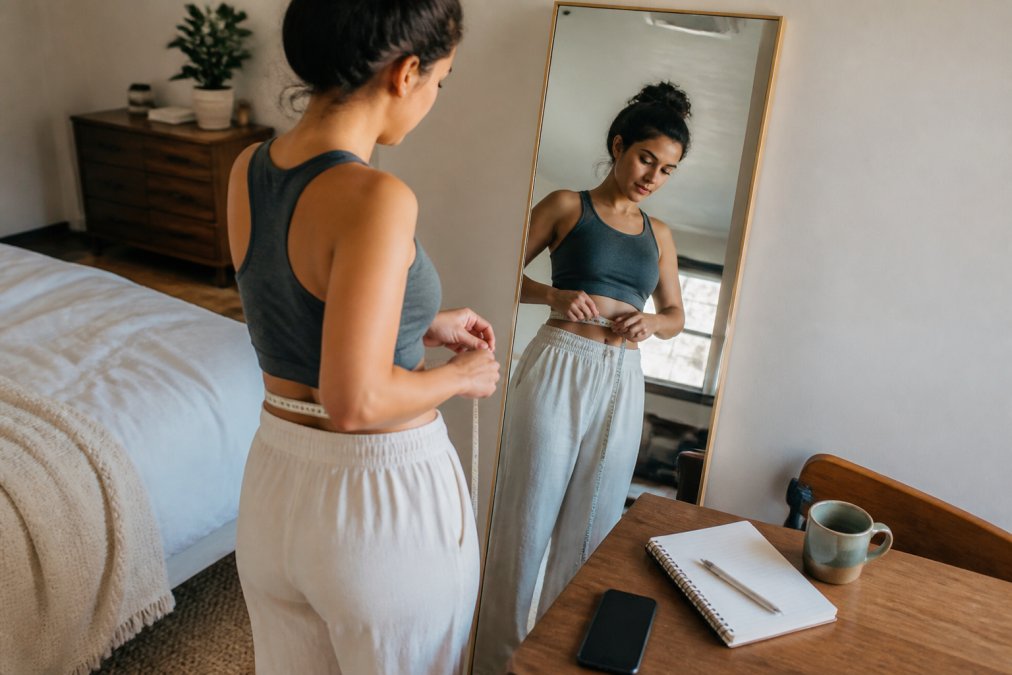
The Five Measurements That Matter Most
Most size charts only need five numbers. Get these right and you will rarely guess wrong again:
- Bust - measure around the fullest part, keeping the tape level
- Waist - measure at your natural waist, the narrowest point
- Hips - measure around the fullest part of your seat
- Inseam - measure from crotch to ankle bone
- Shoulder width - measure across your back from shoulder tip to shoulder tip
Write these down once. Keep them in your phone notes. You will use them every time you shop. A common mistake is measuring over bulky clothes.
Understanding Garment Fabric Quality Before You Buy
Understanding garment fabric quality helps you predict how a piece will fit, drape, and last. The label tells you more than the photo ever will, but only if you know how to read it. This is the fabric composition literacy gap most return-prevention guides skip.
How to Read a Fabric Label in Order
Fiber content is listed by weight, from highest to lowest. That order is the single most useful clue about how a garment will behave:
- First-listed fiber, the dominant material; it drives most of the feel and care
- Second-listed fiber, usually added for stretch, wrinkle resistance, or cost
- Under 5%, typically elastane or spandex for stretch, or a finishing fiber
What Each Fiber Predicts About Fit and Returns
| Fiber | Fit Behavior | Return Risk |
|---|---|---|
| Cotton | Holds shape, may shrink | Low if washed cold |
| Linen | Relaxes with wear, creases | Low if you accept creasing |
| Polyester | Clings, traps heat | Higher in fitted styles |
| Viscose or rayon | Drapes, wrinkles easily | Higher if you expect structure |
| Wool | Holds shape, insulates | Low if cared for properly |
| Elastane blend | Stretches, recovers | Low if under 5% |
The Weave and Knit Clue
Fiber content is only half the story. The construction matters too:
- Woven fabrics, like denim, poplin, and twill, hold structure and resist stretching
- Knits, like jersey and rib, stretch and conform to the body
Weight and Hand-Feel
Fabric literacy is one of the biggest gaps in online shopping. Once you know what to look for, you can spot a bad buy before it ships.
Size Charts, Fit Inconsistency, and Virtual Try-On Tools
Fit inconsistency is the number one reason online clothing gets returned. Two brands can label the same size completely differently.
| Problem | Why It Happens | How to Fix It |
|---|---|---|
| Wrong size ordered | Vanity sizing across brands | Check each brand's own chart |
| Poor fit on arrival | No try-on before buying | Use virtual fitting tools |
| Color looks different | Studio lighting and filters | Read reviews with real photos |
| Fabric feels wrong | Fiber content ignored | Read the label first |
Sustainable Wardrobe Building Tips That Cut Return Rates
Sustainable wardrobe building tips start with buying less and choosing better. A smaller, smarter closet returns far less than a packed one. But the practical mechanics matter more than the philosophy.

The 30-Wear Rule
Before checkout, ask whether you will wear the piece at least 30 times. If the answer is no, the return risk is high. A one-event dress or a trend piece often fails this test. A versatile top that pairs with jeans, skirts, and trousers passes it.
Build Around a Capsule Framework
A capsule wardrobe is not a trend, it is a return-reduction tool. The idea is to own fewer pieces that all work together:
- Choose a base palette of two neutrals and one accent color
- Pick 8 to 12 core pieces that mix and match
- Add layers that work across seasons
- Replace only when something wears out
The Cost-Per-Wear Calculation
Cost per wear is a simple way to see whether a purchase is worth keeping. Divide the price by the number of times you expect to wear it:
- A jacket worn 100 times costs far less per wear than a dress worn twice
- A cheap item returned still costs shipping, packaging, and time
- A quality item kept for years beats three cheap replacements
Track What You Actually Wear
Most people wear about 20% of their closet most of the time. The rest sits. Before buying something new, check whether you already own something similar:
- Photograph your closet so you can see gaps and duplicates
- Keep a wear log for one month to spot patterns
- Note what you reach for and what you avoid
The One-In-One-Out Rule
When a new piece comes in, one goes out. This keeps the closet from growing and forces you to ask whether the new item is truly better than what you already own. If it is not, do not buy it.
Shop Curated Collections
Conscious consumerism is not about spending more. It is about spending well. Every piece you keep is a return you never make.
Repair and Alteration: The Return Alternative Nobody Mentions
Repair and alteration are the return alternatives most shoppers overlook. A hem that is too long or a waist that gapes can often be fixed for less than the hassle of a return. Consider these options:
- Hem too long? Get it shortened instead of returned
- Waist too loose? A tailor can take it in
- Straps slipping? Adjust or replace them
- Small stain? Treat it before giving up
Conclusion: Shop With Intention, Return With Rarely
Avoiding fast fashion return tips comes down to one habit: know before you buy. Measure yourself, read the label, check the size chart, and choose pieces that fit your real life.
Frequently Asked Questions
Why do online clothing returns often end up in landfills?
Many returned garments never make it back to a shelf. Once a return is processed, the item may be damaged, out of season, or too costly to inspect and repackage, so retailers often route it to liquidators, overseas markets, or textile waste streams. Reverse logistics adds shipping emissions on top of the original delivery. The result is a loop where a single fast fashion return can generate more carbon footprint and landfill waste than the original purchase.
How can I accurately determine my size when shopping online?
Measure your bust, waist, hips, inseam, and shoulder width with a soft tape, keeping it snug but not tight. Compare those numbers to the specific size chart on the product page, not a generic brand chart, because fit inconsistency between styles is common. If you fall between sizes, size up for woven fabrics and stay true to size for knits. Save your measurements in your phone so you can check them against any size chart in seconds.
How can I identify high-quality garments before purchasing online?
Start with the fabric composition. Natural fibers like cotton, linen, and wool tend to hold up better than synthetic blends, though a small percentage of elastane can improve stretch and shape retention. Look for details in the product photos: clean stitching, matched patterns, and lined seams signal better construction. Read reviews that mention garment durability and how the piece held up after several washes, not just how it looked on arrival.
What are the environmental impacts of frequent clothing returns?
Every return triggers a second shipment, additional packaging, and a sorting process that often ends in textile waste. Shipping emissions from reverse logistics add up fast, and many returned items are never resold. Frequent returns also encourage overordering, which fuels the fast fashion cycle and disposable clothing habits. Reducing returns through better measurement, fabric literacy, and wardrobe curation lowers your carbon footprint and keeps wearable clothing out of landfills.