

How to Measure Clothes for Online Shopping in 2026
Table of Contents
- What You'll Need Before You Start Measuring
- How to Measure Bust, Waist, and Hips Accurately
- How to Measure Clothes for Fit Comparison Using a Garment You Own
- Tips for Reading Online Size Charts Without Guessing
- How to Measure Clothes for Specific Garment Types
- Common Measuring Mistakes That Lead to Returns
- Conclusion
- Frequently Asked Questions
Last Updated: September 15, 2026
What You'll Need Before You Start Measuring
Learning how to measure clothes for online shopping starts with the right tools, and you need fewer than you'd think. A soft measuring tape, a full-length mirror, and a fitted base layer are enough to get accurate numbers.
Here's the reality: a soft measuring tape costs a few dollars and takes about ten minutes to use. That's the entire barrier between you and clothes that actually fit.
Body measurements describe your physical proportions. Garment measurements describe the clothing itself. Confusing the two is the single biggest reason online orders go back.
Gather these before you begin:
- A flexible soft measuring tape (not a metal carpenter's tape)
- A full-length mirror, or a friend for the back measurements
- Form-fitting clothing, or your undergarments
- A notebook or phone to record every number
- A garment you already own that fits well
How to Measure Bust, Waist, and Hips Accurately
These three numbers drive most size chart decisions. Keep the tape level and snug, not tight. According to the CDC's body measurement guidance, consistent tape placement matters more than perfect precision, because consistency is what makes your numbers comparable across brands.
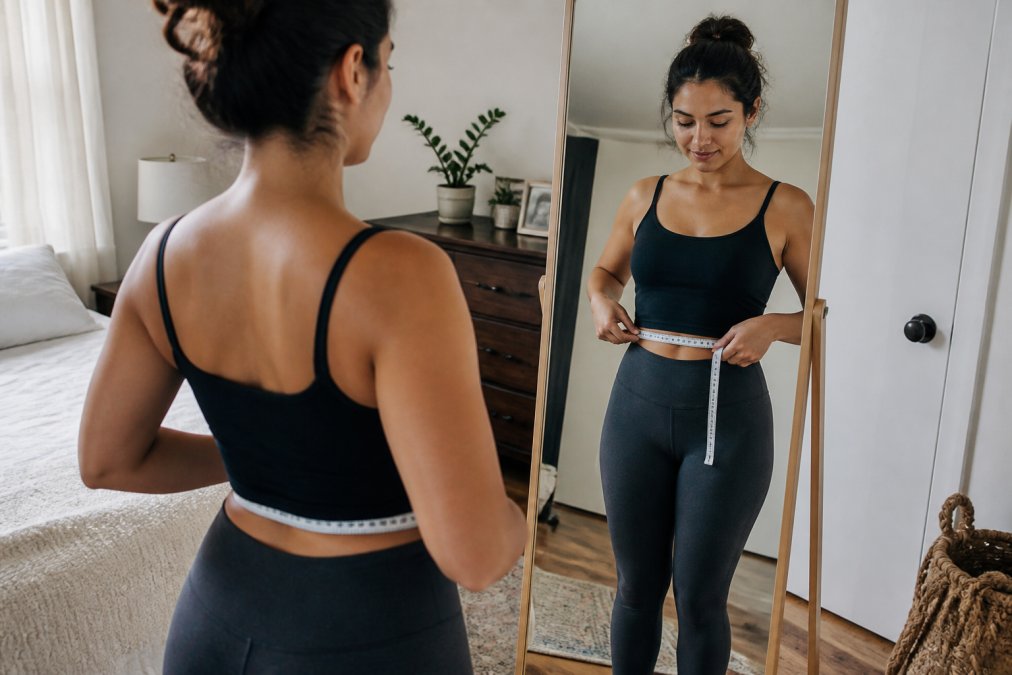
Measuring Your Bust Circumference
Wrap the tape around the fullest part of your bust, keeping it parallel to the floor. Keep your arms down and breathe normally. This number is your bust circumference, and it decides the top half of nearly every dress and blouse.
Finding Your Natural Waist
Your natural waist sits at the narrowest point of your torso, usually just above the belly button. Bend sideways; the crease that forms is your waistline. Measure there, not at your waistband.
Measuring Your Hip Width
Stand with feet together and wrap the tape around the fullest part of your hips and seat. This is your hip measurement, and it matters most for pants, skirts, and fitted dresses.
| Measurement | Where to Place the Tape | Decides |
|---|---|---|
| Bust | Fullest part, arms down | Tops, dresses |
| Natural waist | Narrowest point of torso | Waistbands, fit |
| Hips | Fullest part of seat | Pants, skirts |
How to Measure Clothes for Fit Comparison Using a Garment You Own
The fastest way to know how to measure clothes for fit comparison is to measure a garment that already fits you well. Lay it flat on a table, smooth out the wrinkles, and measure the clothing itself. These are garment dimensions, and they're far more reliable than a brand's generic size chart.
The Pit-to-Pit Measurement Every Shopper Should Know
Pit to pit is the distance across the chest from one armhole seam to the other, measured flat. Double it for the full chest circumference. This single number tells you more about whether a top will fit than any tag size.
Threads Magazine's guide to garment measuring explains that flat measurements remove the guesswork brands build into their charts.
Measuring Inseam, Sleeve Length, and Shoulder Width
- Inseam: from the crotch seam straight down to the hem of the leg
- Sleeve length: from the shoulder seam to the end of the cuff
- Shoulder width: seam to seam across the back, at the widest point
Tips for Reading Online Size Charts Without Guessing
Most sizing discrepancy complaints trace back to one habit: trusting the tag size instead of the numbers. A size 12 at one retailer is a size 14 at another, and neither is 'wrong', they're just built on different blocks. The chart is the only thing that travels with you from brand to brand.
Why Two Size 8s Fit Differently
A common pattern in American retail is vanity sizing: over the past few decades, the physical measurements attached to a given size number have drifted upward at many brands, so a modern size 8 often measures closer to what a vintage size 10 or 12 once did. Because there is no legally binding standard for women's apparel sizes in this market, unlike, say, men's suit sizing, which follows established conventions, each brand sets its own grade rules. That's why the number on the tag tells you almost nothing on its own.
Body Columns vs. Garment Columns
Before you compare anything, identify which column you're reading:
- Body measurement charts list the circumference of the person the garment is designed for. You compare these to your own bust, waist, and hip numbers.
- Garment measurement charts (sometimes labeled 'flat measurements' or 'product measurements') list the dimensions of the clothing itself, laid flat. You compare these to a garment you already own.
Mixing the two is the single most common cause of a wrong-size order. If a chart says 'bust: 38"' and you're a 38" bust, that only works if the chart is a body chart. On a garment chart, a 38" bust measurement usually means the top is cut to fit a smaller body with wearing ease built in.
Reading the Fine Print Competitors Skip
- Ease: Most woven tops and dresses include 2-4 inches of 'wearing ease' beyond the body measurement so you can move. Knits may include negative ease, meaning the garment measures smaller than your body and relies on stretch.
- Model stats: When a product page lists the model's height and the size she's wearing, that's a free fit reference. If she's 5'9" in a size small and you're 5'3", the hem will sit differently on you.
- Rise and inseam: For pants, the chart's rise number tells you where the waistband sits (low, mid, high), and the inseam tells you the finished leg length, not your body's leg length.
- Care and shrinkage: Cotton and linen can shrink 2-5% on a first hot wash. If a chart lists pre-shrunk measurements, that's a signal the brand has already accounted for it.
Converting Sizes Across Regions
This is the step most guides skip, and it's where cross-border orders go wrong. A US size 8 does not equal a UK 8 or an EU 38, those are three different bodies. As a rough reference point, a US women's 8 typically maps to a UK 12, an EU 40, and a label like 'M' or '160/84A' in many Asian size systems. Men's sizing has its own offsets: a US men's 40R suit jacket is roughly a UK 40 but an EU 50.
Because these conversions vary by brand and category, treat any conversion chart as a starting point, not a guarantee. The reliable move is to convert your body measurements into the target brand's chart, not to convert your usual size number.
When a chart lists only body measurements, measure a garment you own and compare it to the chart's flat dimensions. When a chart is international, convert your measurements, never your size number, into the local scale.
How to Measure Clothes for Specific Garment Types
Structured Tailoring: Shoulders First
Knitwear and Oversized Cuts: Trust the Ease
Activewear: Stretch Changes Everything
Denim and Pants: The Numbers That Actually Matter
| Garment | Measure First | Then Check | Watch For |
|---|---|---|---|
| Blazers / tailoring | Shoulder width | Pit-to-pit, sleeve length | Ease over layers; alteration limits |
| Oversized knits | Pit-to-pit | Body length, sleeve length | Dropped shoulders; intended ease |
| Activewear | Waistband (relaxed + stretched) | Inseam, rise, underband | Compression vs. relaxed fit |
| Denim / pants | Flat waist (doubled) | Rise, inseam, leg opening | Fabric relax; pre-wash vs. raw |
| Dresses | Bust, waist, hips | Back length, silhouette | Fabric drape; lining vs. unlined |
Common Measuring Mistakes That Lead to Returns
Other frequent errors:
Conclusion
Frequently Asked Questions
What measurements do I need for online shopping?
You need at least three core body measurements: bust, natural waist, and hips. For tops and dresses, also measure your shoulder width and sleeve length. For pants, add inseam and rise. Write these numbers down and keep them in your phone so you can check them against any size chart before ordering. When in doubt, measure a garment you already own and love, then compare those garment dimensions to the size chart.
Should I use a cloth or metal tape measure for clothing?
A soft measuring tape is the right tool for body measurements because it bends around curves and gives an accurate reading. Metal tape measures used for home improvement are too stiff and will not wrap properly around your bust, waist, or hips. If you do not have a soft tape, use a piece of string or ribbon, then lay it flat against a ruler to get the number. Keep the tape snug but not tight against your body.
How do I account for fabric stretch when measuring clothes?
Check the fabric content on the product page. Knit fabrics with spandex or elastane stretch significantly, so you can size down if you are between sizes. Woven fabrics like denim or linen have little give, so choose the larger size when your measurements fall between two options. If the size chart lists garment dimensions rather than body measurements, compare those numbers to a similar piece you already own to judge how the fabric will behave.
Why do clothing sizes vary so much between different brands?
There is no enforced standard sizing across the fashion industry, so each brand develops its own fit model and grade rules. A medium at one retailer can match a small or large at another. This is why body measurements and garment dimensions matter more than the letter on the tag. Always check the specific size chart for the item you are buying, and when a brand offers a fit guide or visual measurement guide, use it before you add to cart.